Understanding Trust and Boundaries in Intimate Exploration
Trust is often spoken of as the foundation of any relationship, but in practice it is rarely examined with much care. It is assumed, expected, sometimes demanded—but not always understood. It is only when people begin to move beyond familiar structures that trust reveals its full complexity.
In more conventional relationships, many boundaries remain unspoken. They exist as inherited expectations, shaped by culture, habit, and repetition. People follow patterns without always knowing why. These patterns provide a kind of quiet stability, but they can also conceal uncertainty. What is assumed does not always have to be confirmed.
When individuals step into less conventional forms of intimacy, that quiet assumption disappears. What replaces it is something more deliberate. Boundaries must be named. Expectations must be discussed. Nothing is left entirely to chance, because there is no shared script to rely on.
This process can feel unfamiliar at first. It asks for a level of honesty that is not always practiced in everyday life. To define a boundary is not simply to set a limit—it is to understand oneself clearly enough to articulate that limit. This requires reflection, patience, and, often, a willingness to confront uncertainty.
In this sense, exploration is not a departure from structure, but a movement toward a different kind of structure—one that is consciously built rather than passively inherited.
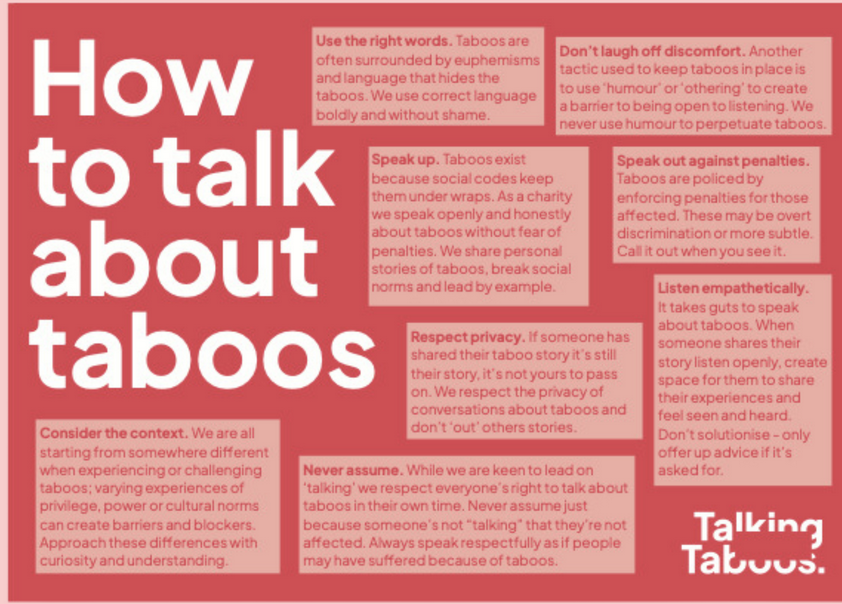
Communication becomes central. Not the casual exchange of words, but a more attentive form of dialogue. It involves listening with intent, speaking with clarity, and accepting that understanding is something that must be maintained, not assumed. There is a rhythm to this kind of communication, a quiet negotiation that continues over time. This growing awareness is part of a wider movement where previously taboo topics have entered open dialogue.
Trust, within this framework, is not a single moment of agreement. It is something that accumulates. It grows through consistency, through the repetition of actions that confirm reliability. It is reinforced in small ways—through respect for boundaries, through attention to detail, through the willingness to pause when something feels uncertain.
There is also a certain vulnerability in this process. To define boundaries is to reveal something personal. To trust another person within those boundaries is to accept a degree of risk. Yet it is precisely this vulnerability that allows trust to take shape. Without it, relationships remain at the surface, guided more by assumption than by understanding.
From the outside, such dynamics are often misunderstood. There is a tendency to view anything unfamiliar as unstable or unbalanced. The presence of clearly defined roles or structures can be mistaken for rigidity or control, particularly when observed without context.
But what appears rigid from a distance is often flexible from within. Roles are not always imposed; they are frequently chosen, negotiated, and adapted. The structure is not there to restrict, but to create a shared understanding within which both individuals can move more freely.
At the same time, it is important to acknowledge that not all structures are healthy. The language of trust and boundaries can be misused, just as it can be used well. This is why clarity matters. The difference between a supportive framework and a harmful one often lies in whether participation is genuinely mutual, whether boundaries are respected consistently, and whether communication remains open.
Exploration, then, is not defined by how far one moves from convention, but by how consciously that movement is made. It is less about the form a relationship takes and more about the awareness with which it is shaped.
Over time, individuals who engage in this kind of intentional relationship-building often develop a deeper sense of what trust means to them personally. It becomes less abstract, less tied to expectation, and more grounded in experience. They learn not only how to trust another person, but how to recognize when that trust is being supported—or when it is not.
In this way, boundaries are not limitations, but points of clarity. They define the space within which connection can grow without confusion. They allow individuals to engage more fully, precisely because they understand where that engagement begins and ends.
Perhaps the most striking aspect of this process is how it changes one’s understanding of relationships more broadly. What begins as an exploration of alternative structures often leads to a more thoughtful approach to all forms of connection. The habits of communication, reflection, and awareness do not remain confined to a single context—they carry over.
And in that sense, the distinction between conventional and unconventional begins to lose its importance. What matters is not the category, but the quality of the connection itself. Trust, built with care, tends to look similar across different forms—it is steady, attentive, and earned over time.
It is not something that appears fully formed. It is something that is made, quietly, through repeated acts of understanding.