Privacy, Identity, and Expression in the Digital Age
In a world increasingly shaped by digital interaction, the relationship between privacy and self-expression has become more layered and, in many ways, more fragile. The boundaries that once separated personal identity from public visibility have blurred, replaced by a fluid space where individuals continuously navigate how they present themselves and how they are perceived by others.
The digital age has introduced a paradox. On one hand, it offers unprecedented freedom of expression. Individuals are no longer limited by geography, social circles, or immediate environments. They can explore ideas, identities, and communities that may not exist in their physical surroundings. On the other hand, this same openness introduces a level of exposure that can feel difficult to control.
Identity, in this context, is no longer a fixed or singular construct. It becomes layered, adaptive, and sometimes fragmented. A person may present one version of themselves in a professional setting, another within a close-knit community, and yet another in anonymous or semi-anonymous spaces. These versions are not necessarily contradictory, but they reflect different aspects of the same individual, shaped by context and intention.
This multiplicity of identity can be empowering. It allows individuals to explore dimensions of themselves without immediate consequence, to test ideas, to connect with others who share similar perspectives. For many, especially those engaging with less conventional aspects of identity or lifestyle, the digital space provides a form of access that was previously unavailable.
However, this flexibility also introduces complexity. Maintaining different layers of identity requires awareness and, often, careful management. The lines between what is shared and what remains private are not always clear, and once information enters the digital space, it can be difficult to fully retract. This fluidity of identity reflects broader cultural shifts discussed in changing perceptions over the last decade.
Privacy, therefore, takes on a new meaning. It is no longer simply about keeping information hidden, but about actively managing visibility. It involves decisions about timing, audience, and permanence. What is shared in one moment may carry different implications in another, and the ability to anticipate these shifts becomes an important skill.
There is also a growing awareness that privacy is not entirely within individual control. Platforms, algorithms, and data systems all play a role in shaping visibility, a topic frequently explored in discussions around digital privacy and identity by organizations such as the Electronic Frontier Foundation. This adds another layer of complexity, where personal expression exists within structures that are not always transparent.
In this environment, expression becomes both an opportunity and a responsibility. The freedom to explore identity must be balanced with an understanding of context and consequence. This does not necessarily limit expression, but it encourages a more deliberate approach.
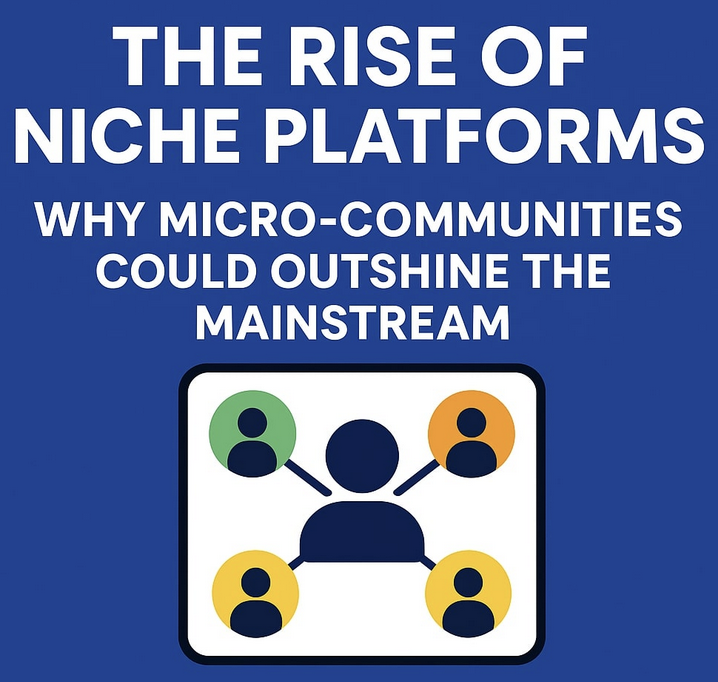
At the same time, the digital age has fostered new forms of connection that rely on shared understanding rather than proximity. Communities built around specific interests or experiences can provide a sense of belonging that transcends traditional boundaries. Within these spaces, individuals often find validation and support that might not be available elsewhere.
Yet even within these communities, the question of identity remains dynamic. As individuals evolve, so too do the ways in which they choose to present themselves. What felt authentic at one stage may shift over time, reflecting changes in perspective, experience, or circumstance.
Ultimately, identity in the digital age is less about definition and more about navigation. It is an ongoing process rather than a fixed state. Privacy, in turn, becomes a tool that supports this process, allowing individuals to engage with the world in ways that feel intentional and sustainable.
As digital spaces continue to expand and evolve, the relationship between privacy and expression will likely become even more nuanced. What remains constant is the need for awareness — not as a constraint, but as a form of agency. In a landscape where visibility is easy and permanence is unpredictable, the ability to choose how and when to be seen becomes one of the most important aspects of modern identity.