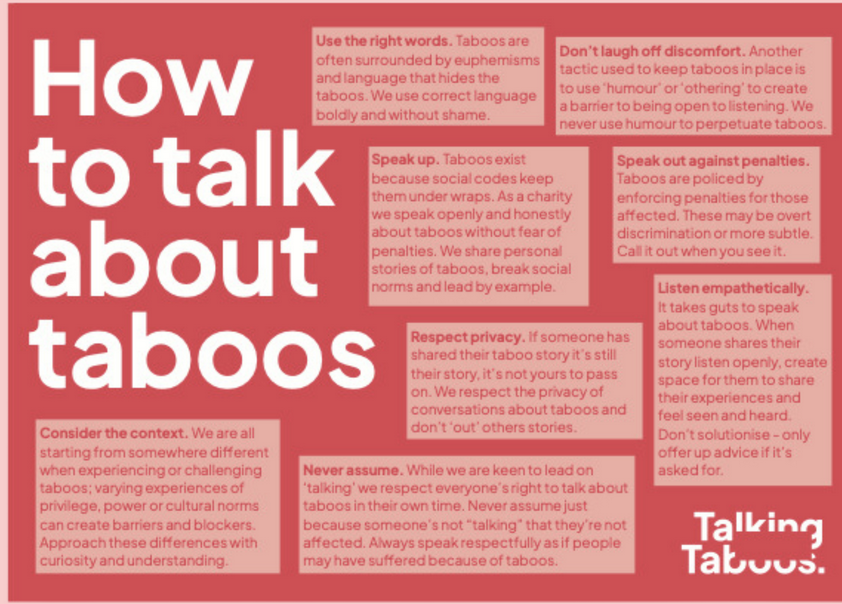
From Taboo to Talk: Changing Perceptions Over the Last Decade
Cultural perceptions rarely change in a straight line. More often, they shift gradually, shaped by repeated exposure, generational differences, and the slow accumulation of new perspectives. What once felt fixed begins to soften at the edges, and over time, ideas that were once dismissed or avoided begin to enter conversation.
Over the last decade, this process has been particularly visible in how society approaches topics that were previously labeled as taboo. These subjects did not suddenly become accepted, nor did they disappear as sources of discomfort. Instead, they moved from silence into visibility, and from visibility into discussion.
In earlier periods, many of these topics existed in a kind of cultural blind spot. They were present, but rarely acknowledged openly. When they were discussed, it was often through narrow or judgmental frameworks that left little room for nuance. This created an environment where individuals who identified with or were curious about these subjects often felt isolated, not necessarily because they were alone, but because the conversation around them was absent or incomplete.
The transition away from this silence began in subtle ways. Increased access to information has played a significant role, particularly with the expansion of digital resources and research into social behavior, such as studies referenced by institutions like the Pew Research Center. What might have once been perceived as rare or unusual became recognizable as part of a broader pattern of human experience.
One of the most significant elements in this shift has been the emergence of a wider range of viewpoints. Instead of a single, dominant interpretation, there is now a spectrum of perspectives. Some approach these topics from a psychological standpoint, others from a cultural or social perspective, and still others from lived personal experience. This diversity does not eliminate disagreement, but it introduces complexity where there was once simplicity.
With complexity comes a change in tone. Conversations that were once defined by immediate judgment are increasingly characterized by curiosity. Rather than asking whether something is acceptable, people are more likely to ask how and why it exists, and what it means for those involved. This shift from evaluation to exploration represents a meaningful change in how dialogue unfolds. Much of this shift has been accelerated by online communities and shared digital spaces.
At the same time, the concept of taboo itself has evolved. Taboo is no longer a fixed boundary, but a shifting one. What is considered sensitive or controversial today may be discussed more openly tomorrow, depending on how cultural attitudes continue to develop. This fluidity reflects a broader movement toward questioning assumptions rather than accepting them without examination.
A particularly important aspect of this transformation is the role of recognition. When individuals encounter representations of experiences similar to their own—even indirectly—it can have a profound effect. This recognition does not necessarily require full understanding or agreement. Sometimes, simply seeing a reflection of one’s own thoughts or experiences within a broader conversation is enough to shift how those experiences are perceived.
Recognition reduces isolation. It creates a sense that one’s perspective exists within a larger context, rather than in complete separation from it. This, in turn, can lead to greater confidence in engaging with those ideas, both internally and in conversation with others.
However, this process is not without its challenges. Increased visibility often brings increased scrutiny. Topics that move into public discourse are subject to interpretation, and not all interpretations are accurate or informed. Simplification, misrepresentation, and surface-level understanding can sometimes replace the nuance that existed within smaller, more focused discussions.
This creates a tension between accessibility and depth. As more people engage with these conversations, maintaining the complexity of the original ideas becomes more difficult. Yet, this tension is also part of the evolution. It reflects the process of ideas moving from the margins into the broader cultural landscape.
Another important element is generational perspective. Younger generations, having grown up with greater access to diverse viewpoints, often approach these topics with a different baseline. What may have been considered taboo in previous decades can feel less distant or more understandable simply because exposure has been more consistent. This does not mean that all barriers have disappeared, but it does suggest that the direction of change is ongoing. These changes also influence how individuals approach identity and expression in the digital age.
The movement from silence toward dialogue is, at its core, a shift in how society engages with difference. Silence often reinforces separation, while dialogue creates the possibility of connection, even when perspectives do not fully align. The presence of conversation allows for a range of responses, from agreement to disagreement, but it moves the discussion into a space where it can be examined rather than ignored.
In this evolving landscape, the idea of “normal” becomes less rigid. Instead of a single standard, there is a growing acknowledgment that human experience exists along a spectrum. This does not eliminate boundaries, but it reframes them as points of discussion rather than fixed limits.
Over time, this gradual expansion of conversation has the potential to reshape not only how specific topics are perceived, but also how society approaches unfamiliar ideas more broadly. The willingness to engage, question, and reflect becomes as important as the conclusions themselves.
Ultimately, the shift from taboo to dialogue is not about reaching a final state of acceptance or agreement. It is about creating space for ongoing conversation. It reflects a cultural movement toward understanding complexity rather than reducing it, and toward recognizing that many aspects of human experience cannot be fully captured by simple definitions.
As this process continues, it is likely that new topics will follow a similar path—moving from silence into visibility, and from visibility into dialogue—continuing the broader pattern of cultural evolution that defines each generation.